The Situation
ExxonMobil had an established culture of Communities of Practice across disciplines — PM CoPs, engineering CoPs, project management CoPs. The design CoP existed but had gone quiet.
It started simply: a colleague asked if I'd be interested in teaching junior designers, given that I'd become a reference point in the UX community internally. I mentored one designer through a project. Then I was invited to formally lead the CoP — running the program, building materials, organizing initiatives.
I treated it like a product problem. Before building anything, I ran kick-off sessions with members from across the global design teams, using the old mailing list as a starting point. I asked what had worked before, what hadn't, and what people actually wanted to learn. Two topics came through clearly: UI/UX craft, and how to make design work inside agile development.
The core tension I was solving
1. What I found when I arrived
The UX + Agile training became the program's most significant output — and it addressed a real organizational problem.
ExxonMobil operated in a predominantly top-down, output-focused culture. Portfolio managers defined what to build. Teams built it. The concepts of outcome-over-output thinking, design validation, and iterative experimentation were genuinely unfamiliar to most people in the room — including experienced product managers and project managers.
The specific patterns I was seeing: teams committing to deliverables without challenging whether those deliverables would solve the right problem. Discovery happening only at the start of a project, not continuously. UX research treated as a phase, not a habit. Success defined as "we shipped it" rather than "we changed user behavior."
How It Grew
1. The pilot
The training started as a small session for the design CoP — 7 to 10 people. The response was strong enough that I applied to present at the ExxonMobil Design Week, the company's annual global event open to all organizations. The application required a brief pitch. It was accepted.
2. The 1st Design Week Edition
In the first Design Week edition, the UX + Agile session was one of the highest-engagement topics across the program. In the second edition, I was invited to run it across both time zones — East and West — to reach teams in the Americas, Europe, and Asia simultaneously.
3. Invites by other CoPs
From there, two other CoPs reached out: Product Management and Project Management. I ran the training with their groups — four additional sessions, each with 5–10 participants. Across all editions, roughly 100–150 people went through the material.
4. Active advocates
Two product managers who had been through the training became active advocates within their own CoPs — running the material themselves, extending the reach without my involvement.
5. Mentoring
The mentoring ran in parallel throughout. I mentored three junior designers during my ExxonMobil time — one in Brazil (UX craft and project confidence), one in Bangkok (UI/UX, her projects, and career development over a longer period), and Isadora, embedded in the mobile app project, who contributed real deliverables alongside her learning.
6. Scale
The Design Thinking track was initiated by two CoP members who wanted to run their own sessions. I supported them in structuring and preparing the material — then stepped back entirely. They ran it. They continued it after I left.
Collaborators
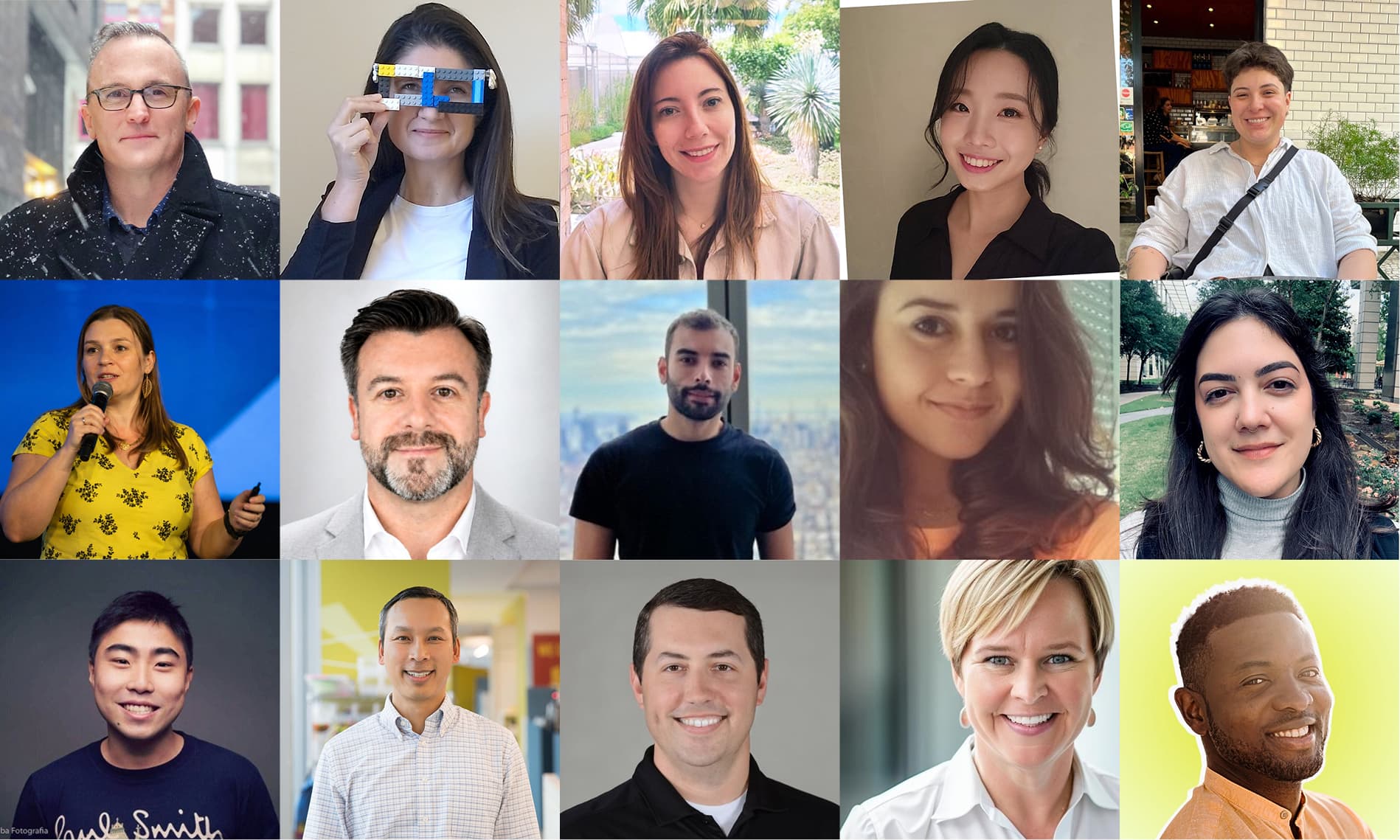
Close collaborators
The people I worked most closely with through this phase.
 Chris O'Brien
 David Carvalho
 Diego Cobelo
 Helena Salgado
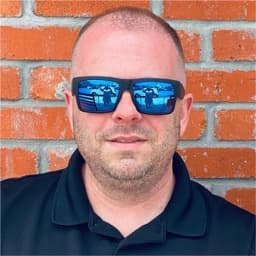 Joel Garfield
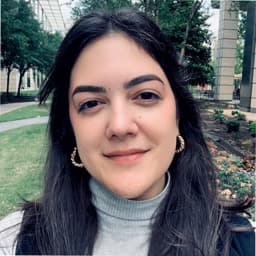 Juliana Lini
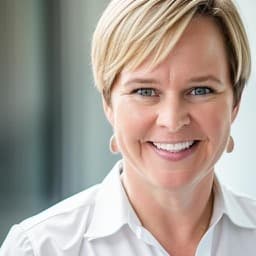 Lisa Albrecht
 Lizzie Haldane
 Marcia CorrenteEncouraged me to take the lead on the CoP.
 Nick Cochran
 Skyler Rossacci
 Vihn Hoang
 William Yakabi
People I mentored
 Amanda Polanski
 Anthony Ejiogu
 Isadora ChandelierTook over leadership of the design CoP after I left.
 Supakan Dechnarong
Non-designer advocates
Non-designers who ran the material themselves and extended its reach.
 Lorete Kossowski
 Lucas Tramunt Pont
What I left behind
When I left ExxonMobil, the CoP was more active than I found it.
The UX + Agile training was being continued
By product managers who had internalized the content and were running it in their own groups.
The Design Thinking track was running independently.
Isadora, my mentee from the mobile app project, assumed leadership of the design CoP.
The training outlived my involvement.
People who weren't designers started teaching design thinking to other people who weren't designers.
That's the outcome I'm most proud of from this period — not the sessions I ran, but the ones I didn't need to run anymore.
"Using UX as a common platform brought together the business and technical sides of the team and made them speak the same language."
What this case shows
The ExxonMobil chapter sits alongside TWAICE as a different kind of evidence.
At TWAICE, influence was built through deep product ownership and domain immersion.
At ExxonMobil, it was built by identifying an organizational gap, creating something from nothing inside a large hierarchical structure, and scaling it until it no longer needed me.
Both required the same underlying skill: earning trust without authority, and using it to move things that weren't moving.