The Setup
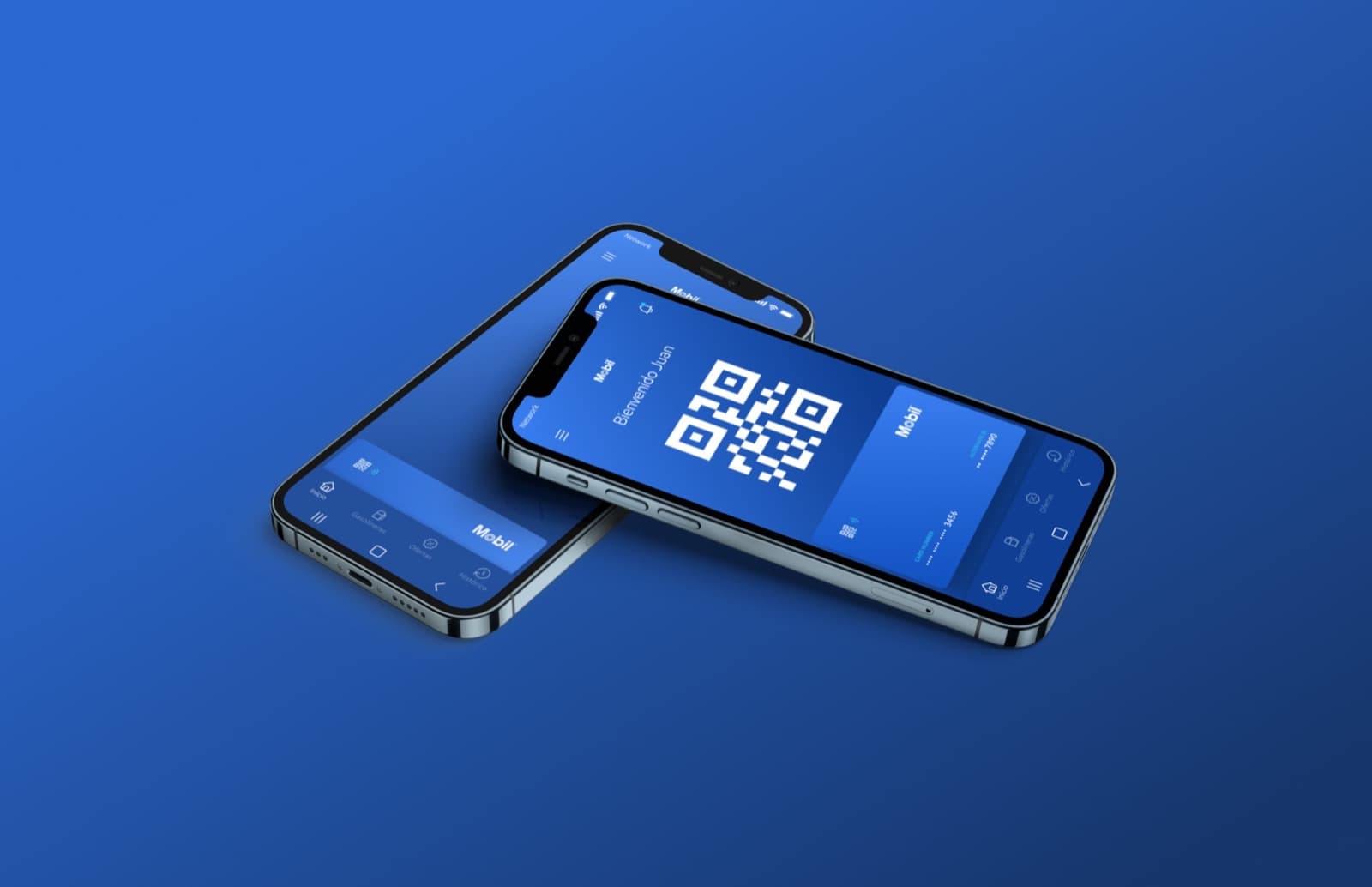
ExxonMobil was entering the Mexican fuel market with a loyalty and convenience app — the primary digital touchpoint for the Mobil brand with consumers. A portfolio manager had engaged Ernst & Young Mexico as the development vendor, who brought a white-label solution built primarily for desktop. I was allocated as the sole design lead, responsible for visual language, UX, information architecture, and ensuring the use cases defined in the company's strategy were actually delivered.
Chris O'Brien (UX Supervisor) joined the initial kick-off week to onboard me into the project. From week two onward, it was on me.
A design trainee, Isadora, was allocated to the project mid-way. I brought her into the work quickly — giving her real deliverables alongside instruction on research methodology, process, and the project context.

What the Research Said
Before designing anything, I immersed myself in multiple layers of commissioned research — a qualitative study by De la Riva, a quantitative study by Mizzouri covering 624 drivers across Mexico City, Veracruz, and Monterrey, and a loyalty market analysis by Loymark RAPP. I synthesized these into a protopersona that grounded the team's shared understanding of the target user.
Three findings shaped everything that followed.
Trust and safety outrank price as station selection drivers. The data was consistent across all studies — 76% of drivers cited getting the quantity they paid for as critical. Users mentioned avoiding certain stations because of dangerous locations. The car wasn't just a vehicle to Mexican consumers; research showed it functioning as a second home, a family companion, a source of pride. Trust in a gas station was therefore trust in something that touched daily life at a deeply personal level.
The right platform was mobile. Android held 85% of the Mexican smartphone market, dominated by mid-range Samsung, Huawei, and Motorola devices. The most common screen resolution was 360x640 — low-to-mid-range hardware. The vendor's white-label solution was built for desktop. This wasn't a stylistic preference — it was a technical mismatch with the actual devices in users' pockets.
Just showing a map wasn't enough to drive adoption. Google Maps already existed and was widely used. For an app to earn a download and recurring use, it needed to deliver something Google Maps couldn't: station-level detail that helped users answer "is this station worth the detour?" — safety signals, available services, fuel prices, promotions. Convenience at the moment of decision, not just discovery.
ExxonMobil's own internal strategy document positioned the mobile platform as the primary channel for loyalty, communication, and future service integration. The vendor's desktop-first approach was contradicting the company's own roadmap.
The Design Process
I structured the work in iterative cycles, each moving from hypothesis through exploration to validation.
Hypothesis formation. I formed explicit design hypotheses connecting user needs to business outcomes, using a lean hypothesis format to make assumptions visible and testable. The central framing: we believe increased engagement will be achieved if users can trust the service, and we will know we're right when we see trust-related signals correlate with new user acquisition.

Exploration. I conducted exploratory interviews with 7 participants, mapping behaviors across three moments — driving, refueling, and at the station. I ran a Kano analysis with 24 participants across 11 planned features to understand perceived value, distinguishing must-haves from attractive-but-optional features.
Key finding from the Kano analysis: most planned features scored as "attractive" — satisfaction generators — but only one scored as a true "must-be": a tangible, easy-to-understand points balance. Without that foundation, engagement would fail regardless of how many features were added. Physical loyalty cards scored as actively undesirable and risked outright rejection.


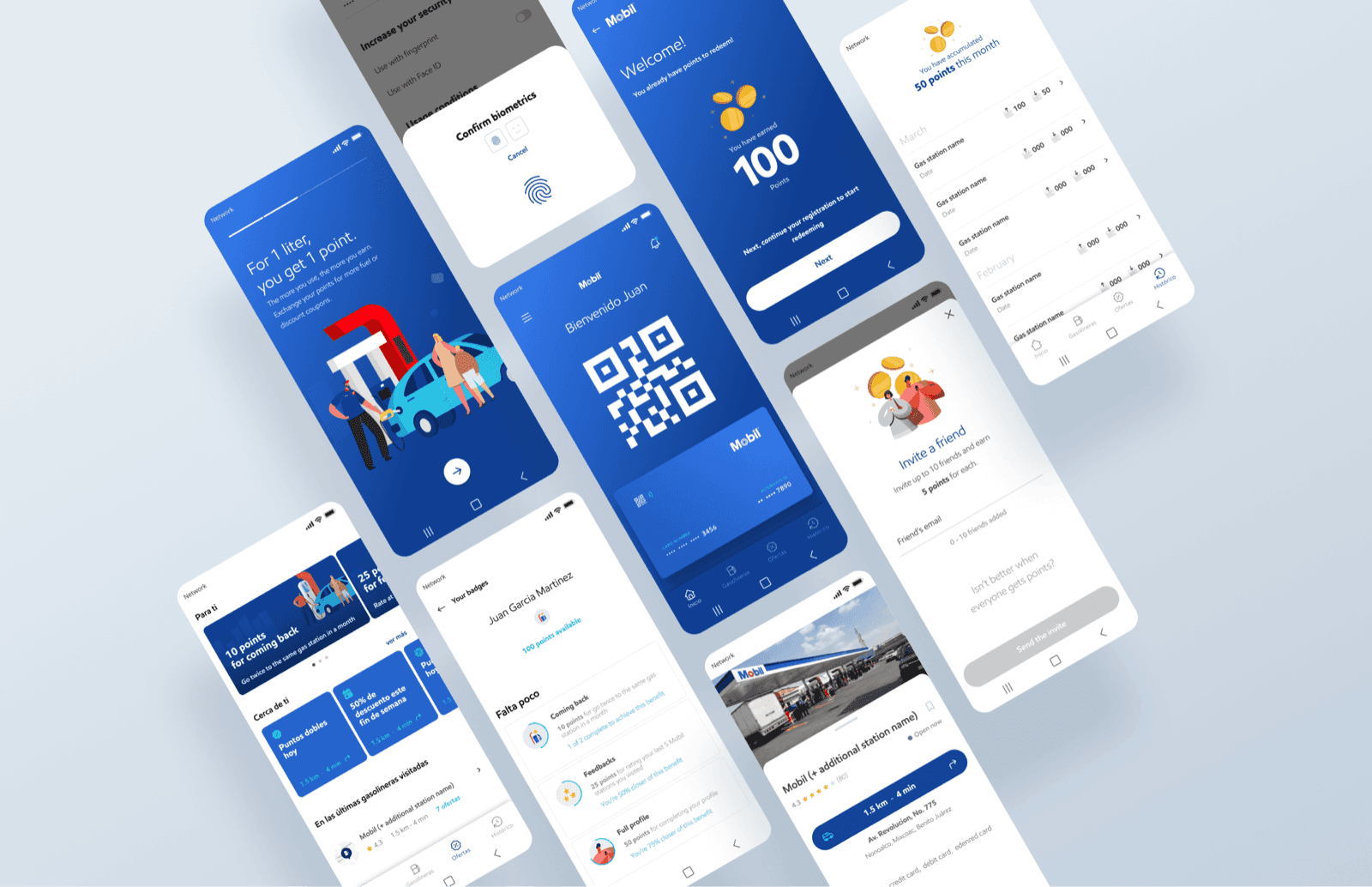
Design. I mapped the user journey end-to-end, designed the information architecture, and produced four UI studies that resolved into a testable prototype. Design decisions were grounded in the research: guest access before login (reducing friction for first-time users), station-level detail in the finder, digital invoice management as a high-value differentiator, and a security model that didn't introduce unnecessary friction at the point of earning points.
Validation. I ran usability testing with 7 participants across core flows — onboarding, station finder, points exchange, additional offers, digital invoices, and PIN management. The SUS score came back at 77, above the industry average of 68.
The 38 documented findings were categorized by type and severity: 16 about the station finder, 8 about onboarding, and critical concerns about the perceived value of the economic model. The most important insight: users couldn't intuitively translate points into real-world value. "50 points" meant nothing without a clear conversion to something tangible. This became the primary recommendation for Cycle 2.
COVID adaptation. Mid-project, face-to-face research became impossible. I adapted by recommending remote testing approaches and used ExxonMobil's internal Mexican employee base for validation participants — a practical compromise that kept the research moving without losing the cultural specificity the project required.
Holding Ground with the Vendor
Two lines I held consistently throughout the project.
The first was success criteria for each development slice. Before any slice moved to development, I required verifiable confirmation that the agreed use cases were covered — not just technically built, but functional in the way the strategy defined. EY Mexico called their process agile. In practice, minimum criteria weren't consistently met before moving forward. Holding this line slowed some conversations. It also prevented shortcuts that would have required costly rework later.
The second was mobile experience quality. The vendor's defaults reflected desktop thinking — interaction patterns, information density, navigation logic. I maintained the mobile-first direction through design specifications, prototype testing, and direct challenge in review sessions. The research gave me the evidence: this was an Android-dominant, mid-range-hardware market where a desktop-adapted experience would create friction at every touchpoint.

What I Left With
I left ExxonMobil before final implementation. Documented outcomes are from concept testing and usability validation — not post-launch metrics.
What validation confirmed: the mobile-first approach matched actual usage context. The safety and convenience framing resonated with target users. The core use cases defined in the original strategy were covered in the design. The SUS score of 77 placed the prototype above average on usability.
The project also confirmed something broader: a rigorous discovery-to-validation process, run within the constraints of a large enterprise, a pandemic, and a resistant vendor, produces better-grounded decisions than moving straight to delivery. That approach — hypothesis, exploration, validation, iteration — became part of how I work everywhere.